
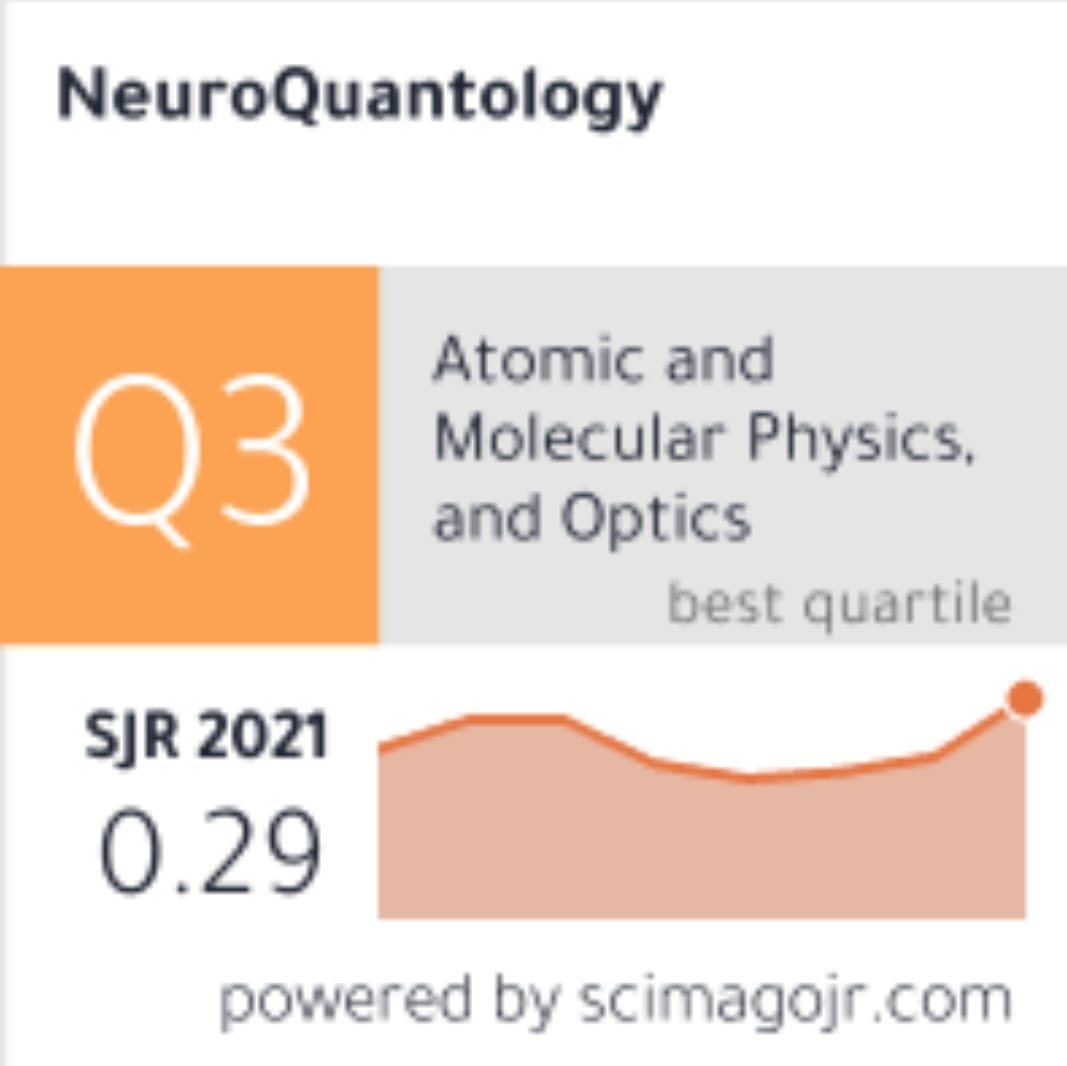

NeuroQuantology is an international, interdisciplinary, open-access, peer-reviewed journal that publishes original research and review articles on the interface between quantum physics and neuroscience. The journal focuses on the exploration of the neural mechanisms underlying consciousness, cognition, perception, and behavior from a quantum perspective. NeuroQuantology is published monthly
NeuroQuantology aims to promote scientific dialogue and collaboration among researchers, practitioners, and scholars in the fields of neuroscience, quantum physics, psychology, philosophy, and related disciplines. The journal welcomes empirical, theoretical, and methodological contributions that enhance our understanding of the mind-brain relationship and the fundamental principles of quantum mechanics that apply to the study of cognition and behavior.
Some of the key topics covered in NeuroQuantology include quantum information processing in the brain, quantum coherence and entanglement in neural networks, quantum-inspired models of brain function, quantum-inspired models of perception and decision making, quantum consciousness, and the philosophical and ethical implications of quantum approaches to neuroscience.
NeuroQuantology is committed to providing high-quality, rigorous, and timely peer review and publication services to authors worldwide. The journal operates on a continuous publishing model, with accepted articles